 Rattan-Java
Journal
Wholesale Rattan Baskets Indonesia: Complete Buyer's Guide
September 26, 2026 · 6 min read
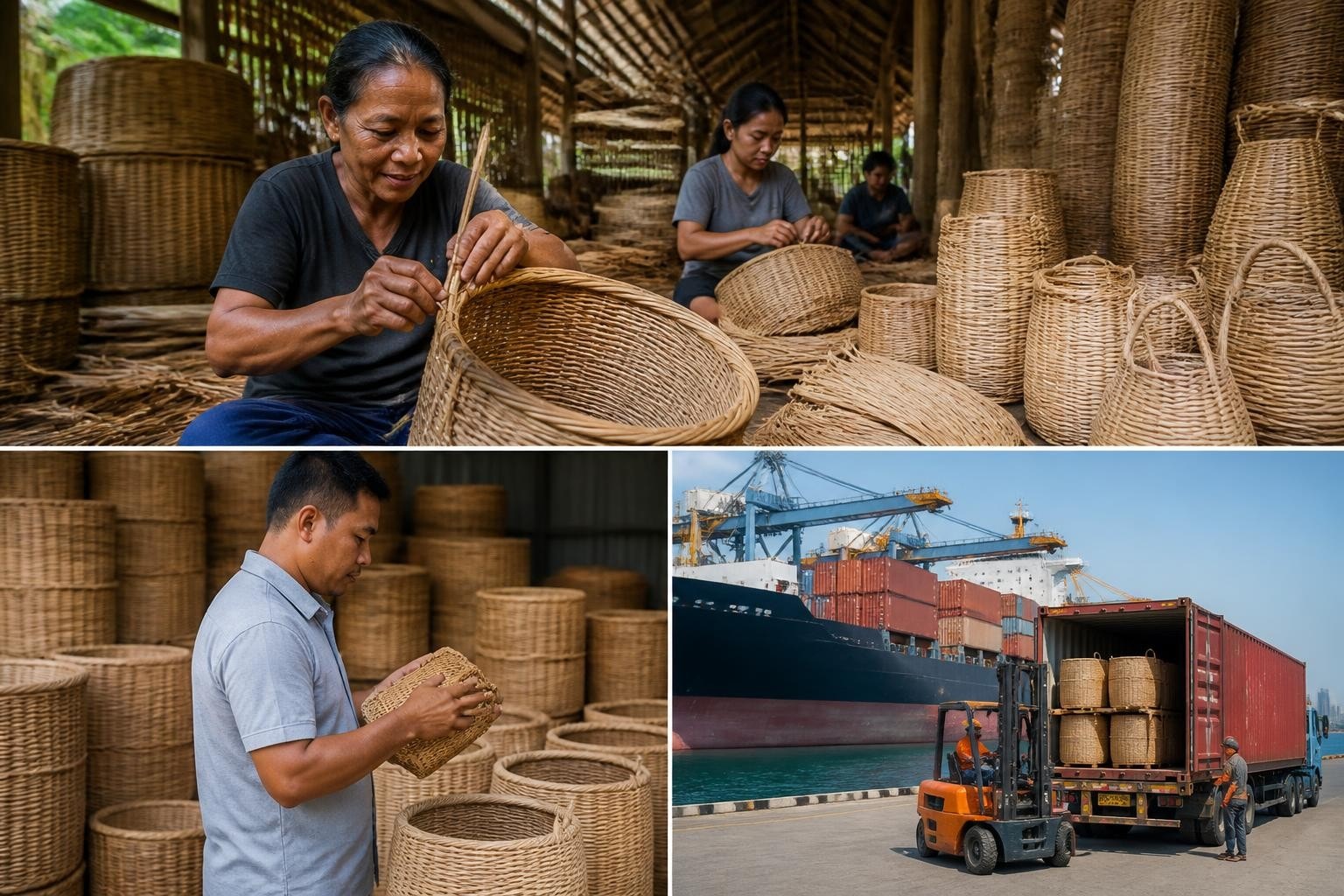
Indonesia has emerged as the world's leading supplier of handwoven rattan products, with Java serving as the epicenter of artisan craftsmanship and export operations. For retailers, interior designers, and importers seeking authentic, sustainable storage solutions, wholesale rattan baskets Indonesia represents an opportunity to source exceptional quality at competitive prices while supporting traditional craft communities. Understanding the landscape of Indonesian rattan production, from raw material sourcing to artisan networks, enables buyers to build reliable supply relationships that deliver consistent quality and value.
Why Indonesia Dominates the Wholesale Rattan Market
Indonesia controls approximately 85% of the world's rattan supply, with extensive forest resources concentrated across Java, Kalimantan, and Sulawesi. This natural advantage combines with centuries of weaving traditions to create an unmatched production ecosystem.
The country's rattan industry employs over 500,000 artisans who have inherited techniques passed down through generations. These craftspeople transform raw rattan canes into intricate baskets, hampers, and storage solutions using hand-weaving methods that machines cannot replicate.
Key competitive advantages include:
- Direct access to premium rattan species including Manau, Tohiti, and Semambu
- Lower labor costs while maintaining exceptional craftsmanship standards
- Established export infrastructure through major ports in Jakarta, Surabaya, and Semarang
- Government support for rattan product exports through favorable trade policies
- Comprehensive quality control systems developed over decades of international trade

Trade statistics confirm Indonesia's dominance, with the nation exporting over $180 million in basketwork and plaiting materials annually, representing nearly 40% of global market share.
Quality Standards for Wholesale Rattan Baskets
When sourcing wholesale rattan baskets Indonesia, understanding quality grades ensures you receive products that meet market expectations and minimize return rates.
Grading Systems and Material Selection
Indonesian rattan baskets typically follow three-tier grading systems based on material quality, weaving consistency, and finishing standards.
| Grade | Material Characteristics | Weave Quality | Typical Applications |
|---|---|---|---|
| Premium | Uniform color, no blemishes, 3-5mm diameter consistency | Tight weave, <2mm gaps, invisible joints | Luxury retail, high-end hospitality |
| Standard | Minor color variation, small natural marks, 3-6mm diameter | Even weave, <4mm gaps, neat joints | Mid-market retail, contract furnishings |
| Economy | Natural color variation, visible nodes, 3-8mm diameter | Functional weave, <6mm gaps, visible joints | Budget retail, storage solutions |
Premium-grade baskets command 40-60% price premiums but deliver significantly lower defect rates and longer product lifecycles. Experienced buyers often select standard grade for volume orders while reserving premium materials for signature product lines.
Sustainability Certifications and Ethical Sourcing
Modern wholesale buyers increasingly prioritize verified sustainable sourcing. Indonesia has developed robust certification frameworks that differentiate responsible suppliers from conventional operations.
The Participatory Guarantee System enables small-scale harvesters and artisan cooperatives to verify sustainable practices through community-based certification. This approach provides transparency without the high costs of formal third-party audits.
For larger operations, FSC certification offers internationally recognized Chain of Custody documentation. Recent pilots in Kalimantan's rattan forests demonstrate how certification programs support both conservation goals and artisan livelihoods.
Buyers working with certified suppliers gain marketing advantages in sustainability-conscious markets while ensuring long-term material availability. The WWF-Indonesia rattan initiative highlights how responsible harvesting preserves forest ecosystems that generate higher economic returns than clear-cutting alternatives.
Sourcing Strategies for International Buyers
Successful wholesale rattan basket procurement requires strategic supplier relationships and clear quality protocols.
Direct Manufacturer Relationships vs. Trading Companies
Direct engagement with Javanese manufacturers like those producing handwoven hampers and baskets offers several distinct advantages. Manufacturers provide greater customization flexibility, lower unit costs through elimination of intermediary margins, and direct communication with production teams who understand technical specifications.

Trading companies serve valuable roles for smaller buyers or those new to Indonesian sourcing. They aggregate smaller orders, handle logistics complexity, and provide English-language support throughout the procurement process.
Manufacturer partnership benefits:
- 15-30% cost savings through direct pricing
- Custom sizing, weaving patterns, and finishing options
- Factory audits and quality inspection access
- Long-term capacity planning and priority production scheduling
- Technical collaboration on new product development
When trading companies make sense:
- Initial orders below 100-piece minimums
- Multiple product categories from different regions
- Limited in-country logistics capabilities
- Need for consolidated shipping and documentation
Pricing Frameworks and Order Quantities
Wholesale rattan baskets Indonesia pricing follows volume-based structures with significant economies of scale. Understanding break points enables strategic order sizing.
Small basket orders (diameter 20-30cm) typically range from $3.50-$8.00 per unit for quantities of 100-500 pieces. Volume commitments of 1,000+ pieces reduce per-unit costs by 20-35%, with prices dropping to $2.50-$5.50 depending on complexity and finish specifications.
Container optimization maximizes value. A standard 40-foot container holds approximately 8,000-12,000 medium baskets depending on nesting efficiency and protective packaging requirements. Experienced buyers coordinate multiple SKUs to achieve full container loads while maintaining product variety.
Payment terms generally follow 30% deposit upon order confirmation, with 70% balance due before shipment. Established relationships may negotiate extended terms, but initial orders typically require letter of credit or wire transfer arrangements.
Production Timelines and Capacity Planning
Javanese rattan basket production operates on seasonal rhythms that influence lead times and availability.
Dry season months (April through October) offer optimal production conditions with faster material processing and more reliable artisan availability. Wet season production continues but may extend timelines by 1-2 weeks due to humidity-related drying requirements.
Standard Lead Time Components
From order confirmation to ready-for-shipment typically requires 6-10 weeks for wholesale volumes:
- Raw material procurement and preparation: 7-14 days
- Weaving and assembly: 21-35 days
- Finishing, quality control, and packaging: 7-10 days
- Documentation and export preparation: 3-5 days
Rush production for smaller quantities (under 500 pieces) can sometimes compress to 4-6 weeks with premium pricing (typically 15-25% surcharge). Planning around 90-day cycles from order to warehouse receipt provides comfortable buffers for seasonal demand spikes.
Artisan capacity constraints affect availability during peak export seasons (January-March and August-October). Forward contracting secures production slots and locks pricing for buyers with predictable seasonal requirements.
Quality Control and Inspection Protocols
Implementing systematic quality verification protects against costly defects and strengthens supplier accountability.
Pre-shipment inspection should verify weave consistency, structural integrity, color uniformity, and finishing quality across random samples representing 10-15% of total order volume. Professional third-party inspection services cost $300-$500 per container but typically prevent losses exceeding 10x their fees.
Detailed specifications documented with photographs, dimension tolerances, and acceptance criteria eliminate subjective interpretation. Successful buyers maintain specification binders shared with manufacturers during initial sampling phases and referenced throughout production runs.
Defect categorization distinguishes between minor cosmetic issues and functional failures. Establishing acceptable quality levels (typically 2-3% for minor defects, 0.5% for major defects) provides clear pass/fail criteria that protect both parties.
Sourcing wholesale rattan baskets Indonesia offers exceptional value when buyers understand quality standards, build direct manufacturer relationships, and implement robust verification protocols. Rattan-Java brings generations of Javanese artisan expertise to international markets, crafting sustainable, handwoven rattan products that meet rigorous quality standards while supporting traditional craft communities. Connect with our team to explore custom basket designs, review our sustainable sourcing practices, and plan your next wholesale order with confidence.
Looking for handwoven rattan furniture?
Explore our collections or reach out for wholesale catalog and pricing details.
Continue Reading